
English


QQ:1195537948
Tel:400-167-8986
Email:order@genenode.com
Web:www.genenode.com
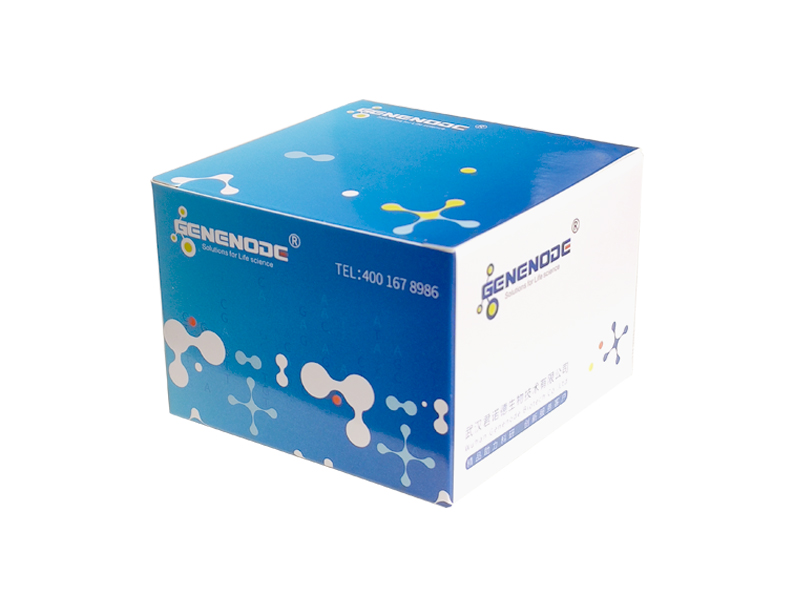
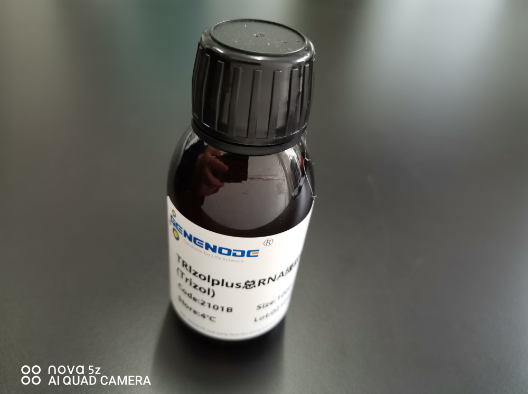
Total RNA Extraction Reagent(Trizol)
Total RNA Extraction Reagent (Trizol) is a ready-to-use reagent for total RNA isolation. It enables rapid extraction of total RNA from various tissues or cells derived from human, animal, plant, yeast, bacterial and other sources. It delivers excellent isolation performance for small samples (50–100 mg of tissue or 5×10⁶ cells) as well as large samples (≥1 g of tissue or >10⁷ cells). With a simple workflow, it allows simultaneous processing of multiple samples, and the entire procedure can be completed within one hour.
Number:R2101
Specifications:50mL/100mL
Price:250/450
Package:box
Storage:4℃
Total RNA Extraction Reagent(Trizol)
Packing Specification :
R2101-50
Total RNA Extraction Reagent(Trizol)
50mL
250
R2101-100
Total RNA Extraction Reagent(Trizol)
100mL
450
R2101-500
Total RNA Extraction Reagent(Trizol)
100mL×5
2020
For research use only. Not for use in medicine, clinical diagnosis, food, cosmetics or other applications.
Product Introduction:
Total RNA Extraction Reagent is a broad-spectrum total RNA extraction reagent. This reagent is suitable for the extraction of total RNA from samples such as animal tissues, plant materials, various microorganisms and cultured cells. TRIzol can fully lyse samples while maximally ensuring the integrity of RNA. After adding chloroform and centrifugation, the solution will separate into three layers, and RNA is distributed in the upper aqueous phase. After collecting the upper aqueous phase, total RNA can be recovered by isopropanol precipitation.
It can be used in various molecular biology experiments including RT-PCR, Real Time PCR, Northern blot, Dot blot, poly A enrichment, in vitro translation and cDNA library construction.
Product Features:
No contamination: The entire kit is RNase-Free treated.
Wide applicability: Suitable for RNA extraction from various sample materials including animal tissues, plant tissues, various microorganisms and cultured cells.
Easy to operate: Simple operation, and the whole extraction process takes only about 30 minutes.
High quality: Effectively ensures RNA integrity, with high RNA recovery efficiency and high purity, free from protein and other impurities. The OD260/OD280 ratio can reach 1.9~2.2, and it can be used in various molecular biology experiments.
Protocol:(Please read the precautions before the experiment)
Sample Processing:
1.Plant tissues: Take fresh plant tissues and grind thoroughly in liquid nitrogen, or cut plant tissues into pieces and grind rapidly directly in TRIzol. Add 1 mL TRIzol per 50~100 mg tissue and mix well.Note: The sample volume generally should not exceed 10% of the TRIzol volume.
2.Animal tissues: Take fresh or -80°C frozen animal tissues and mince as finely as possible. Add 1 mL TRIzol per 30~100 mg tissue and homogenize with a homogenizer.Alternatively, grind into powder in liquid nitrogen, transfer to a new centrifuge tube, add 1 mL TRIzol and mix well.Note: The sample volume generally should not exceed 10% of the TRIzol volume.
3.Adherent cells: Add lysis buffer directly into the culture plate to lyse cells. Add 1 mL TRIzol per 10 cm² of culture plate area, and pipette repeatedly until no obvious cell clumps are visible. Insufficient addition of TRIzol will cause DNA contamination.
4.Suspension cells: Collect cells by centrifugation. Add 1 mL TRIzol per 5~10×10⁶ animal, plant and yeast cells or per 1×10⁷ bacterial cells and mix well. Pipette repeatedly until no obvious cell clumps are visible. No washing is required to avoid mRNA degradation.
5.For bacterial RNA extraction, SpinPure™ Bacterial RNA Rapid Extraction Kit (Spin Column Type) (Cat. No.: 2120) is recommended; for RNA extraction from blood or liquid samples, TRI LS Reagent (TRIzol LS Reagent) (Cat. No.: 2107) is recommended.
Extraction Procedure:
1.Leave the treated samples at room temperature for 5~10 minutes to completely dissociate the nucleic acid-protein complexes.
2.Optional step: Centrifuge at 12,000 rpm, 4°C for 10 minutes, transfer the supernatant to a new RNase-free centrifuge tube.(An additional separation step may be required when the sample is rich in protein, fat, polysaccharides or extracellular substances such as muscle, adipose tissue or plant tubers.)
3.Add 200 μL chloroform per 1 mL TRIzol. Vortex vigorously for 15 seconds and leave at room temperature for 3 minutes.
4.Centrifuge at 12,000 rpm, 4°C for 10 minutes. The sample will separate into three layers: the lower organic layer, the middle protein layer and the upper aqueous layer. RNA exists in the upper aqueous layer.
5.Transfer the upper aqueous layer to a new centrifuge tube and add an equal volume of isopropanol. Invert to mix and leave at room temperature for 10 minutes.(Do not aspirate precipitates and floating debris. Floating debris may adhere to the outside of the pipette tip; be careful not to bring it into the centrifuge tube.)
6.Centrifuge at 12,000 rpm, 4°C for 10 minutes, discard the supernatant. A gel-like pellet will form at the bottom of the tube.
7.Wash the pellet with vortexing using 1 mL of 75% ethanol per 1 mL TRIzol used.
8.Centrifuge at 12,000 rpm, 4°C for 3 minutes, discard the supernatant (do not aspirate the RNA pellet). The remaining small amount of liquid can be briefly centrifuged and then aspirated with a pipette.
Leave at room temperature for 2~3 minutes. Add 30~100 μL RNase-free H₂O to fully dissolve the RNA. Do not over-dry the pellet, otherwise it will be difficult to dissolve.The eluted RNA can be used immediately or stored at -80°C.
For specific discounted product prices, please consult via email or QQ!
E-mail:order@genenode.com
Wechat:18518676727/17307107886
Q Q:1195537948 / 1751728433


Official wechat
Contact number
18518676727
Instant messaging
QQ:800176181/1195537948
order@genenode.com
Address
C5-1, Zone C, Yangluo Port Huazhong International Industrial Park, No. 99, Yubo North Road, Yangtze River New Area, Wuhan City, Hubei Province
Beijing Genenode Biotech Co.,Ltd all right reserved